
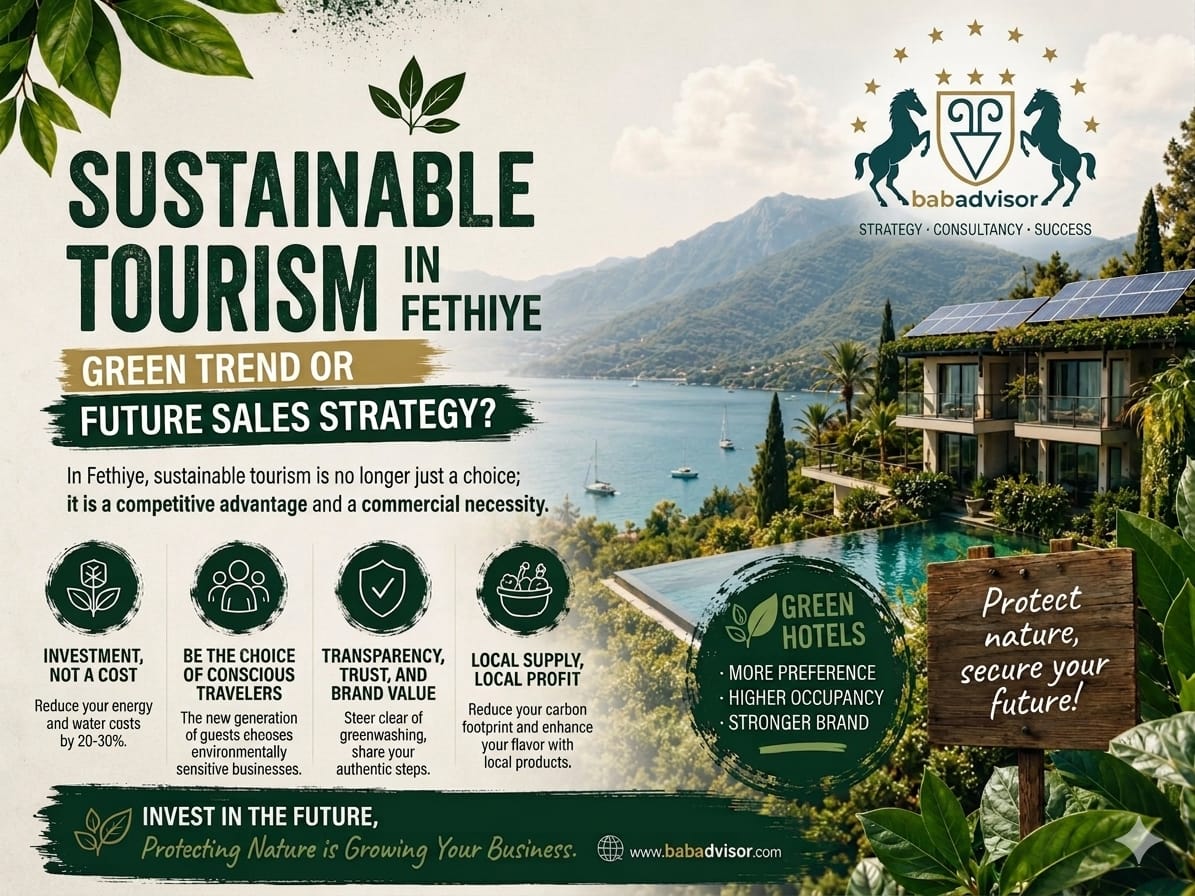
Fethiye is entering the 2026 tourism season with a powerful transformation, driven not only by its natural beauty but also by sustainability-focused development projects. In an era where climate policies directly influence the tourism industry, the “green hotel concept” is no longer just a preference—it has become a strategic competitive advantage.
The concept of Fethiye sustainable tourism has evolved beyond environmental awareness. Today, it represents a strong growth and positioning strategy for hospitality businesses. Increasing competition, rising operational costs, and shifting guest expectations are pushing hotels beyond traditional sales approaches.
At this point, sustainable tourism practices stand out as a critical tool that not only reduces costs but also enhances brand value, increases direct bookings, and enables differentiation in international markets. Especially in destinations like Fethiye, where natural assets define the tourism identity, sustainability is no longer optional—it is a fundamental requirement for long-term success.
So, the key question for hotel owners is:
Is Fethiye sustainable tourism truly a revenue-generating investment, or just a branding trend?
For many hotel managers, sustainability investments initially appear as a financial burden. Systems such as solar energy installations, water recycling technologies, and energy efficiency upgrades may require significant upfront costs.
However, the medium and long-term picture tells a different story:
Field data shows that these investments can deliver 20–30% operational cost savings for hospitality businesses.
More importantly, hotels that invest in sustainability can:
Conclusion: Sustainability is not an expense item; it is an investment that directly impacts the revenue model.
The structure of tourism demand is changing rapidly. Especially travelers from European markets, digital nomads, and Gen Z tourists no longer make decisions based solely on price.
The new generation of guests:
This shift turns sustainable tourism in Fethiye into a direct revenue-driving factor.
On platforms like Booking.com and TripAdvisor:
significantly influence visibility and booking conversion rates.
One of the biggest risks in sustainability is greenwashing—presenting environmentally friendly practices that do not actually exist.
Modern guests:
For example, if a hotel promotes towel reuse policies but ignores water consumption control in landscaping, it creates a trust gap.
The correct strategy is:
Not to appear perfect, but to be transparent.
Real data such as “We reduced plastic usage by 40% this year” builds stronger long-term brand loyalty than exaggerated claims.
One of the most effective and practical pillars of sustainable tourism is the local sourcing model.
In Fethiye:
This approach:
Strategic advantage:
Hotels offering authentic local experiences can achieve stronger pricing power compared to standard properties.
Search engines and online travel platforms are increasingly prioritizing sustainability indicators.
This results in:
Ranking for terms like “Fethiye sustainable tourism” requires alignment between operational practices and digital content strategy.
In Fethiye, sustainable tourism is no longer a trend—it is a direct sales strategy and competitive necessity.
Every investment in nature leads to:
Hotels that place sustainability at the core of their operational culture will not only secure today’s market but also shape the future of tourism demand.
Competition in tourism is no longer defined solely by price or location, but by value and vision. At Babadvisor, we believe that businesses integrating sustainability into their model do not only optimize costs—they build a stronger brand narrative and secure a lasting position in the global market.
Small transformation steps taken today form the foundation of higher occupancy rates and loyal guest communities tomorrow.