
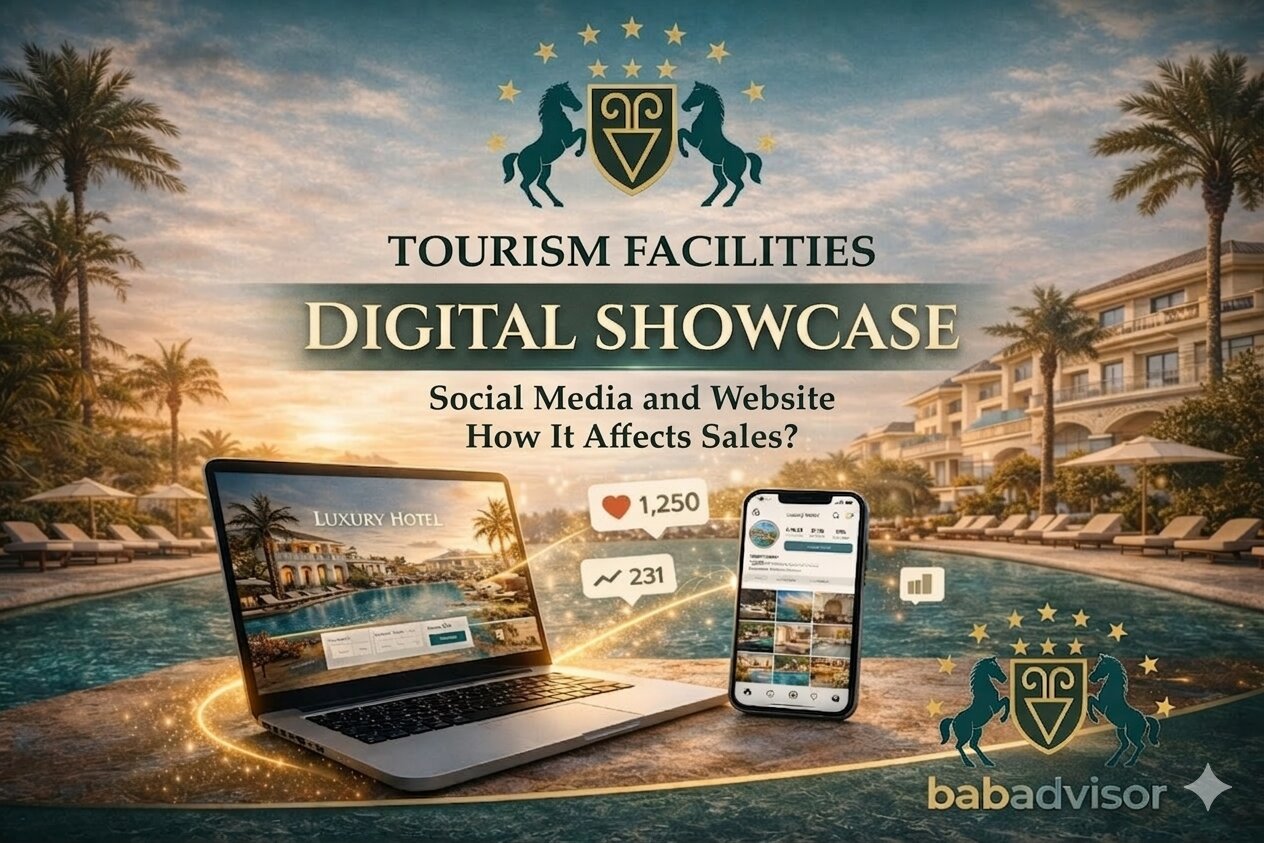
As the tourism industry rapidly becomes more digital, the way guests plan their holidays has changed significantly. Today, the sales performance of a tourism property is no longer determined only by its location, service quality, or pricing strategy. One of the most influential factors in a guest’s decision-making process is now the property’s digital visibility.
A hotel’s or tourism property’s social media accounts and website have become the first touchpoints where potential guests encounter the business. For this reason, professional social media management and a well-structured website are no longer just promotional tools. They are powerful sales channels.
But how exactly do social media and websites influence bookings?
Where Do Guests Research Tourism Facilities Before Booking?
Before making a reservation, most guests typically review several digital sources:
During this process, the digital identity of a tourism property directly shapes the guest’s perception. Outdated social media accounts, low-quality photos, or a poorly designed website can quickly reduce a potential guest’s trust.
For this reason, digital marketing strategies have become an essential part of sales and marketing activities for tourism facilities.
Why Is Social Media an Important Marketing Channel for Tourism Facilities?
Social media is no longer just a communication tool in the tourism industry. When used strategically, it becomes a powerful guest acquisition channel.
Visual platforms such as Instagram offer particularly strong opportunities for tourism businesses.
A professionally managed social media account can:
Video content—especially short-form videos such as Reels—helps tourism facilities become more discoverable and reach new audiences.
However, social media management is much more than simply sharing photos. Without proper content planning, audience targeting, and advertising strategies, the impact of social media on sales can remain limited.
This is where professional social media management creates a significant advantage for tourism facilities.
The Website: The Strongest Direct Sales Channel
Although many tourism facilities have websites, a large portion of them fail to generate effective booking conversions.
A well-designed tourism website can:
Some essential elements of a successful tourism website include:
With the rapid growth of mobile users, mobile-optimized website design has become a critical factor for tourism facilities.
How Should Social Media and Websites Work Together?
The most effective results in digital marketing are achieved when different channels work together.
In simple terms:
In other words:
Social media generates traffic, while the website converts it into bookings.
For this reason, the most effective strategy for tourism facilities is to plan social media content in alignment with their website.
For example:
This integrated approach can significantly improve the digital sales performance of tourism businesses.
Why Professional Digital Management Matters for Tourism Facilities
Competition in the tourism industry is increasing every year. Many facilities in the same destination often offer similar services.
In such a competitive environment, one of the key differentiators is a strong digital marketing strategy.
Professionally managed social media and website strategies can:
Digital strategies that are aligned with overall sales and marketing goals provide sustainable growth opportunities for tourism facilities.
Conclusion
In today’s tourism market, having a strong digital presence is no longer optional for tourism facilities—it is essential.
Professional social media management and an effective website design not only increase visibility but also directly influence booking decisions.
With a well-planned digital marketing strategy, tourism facilities can attract the attention of potential guests, build trust, and increase their sales.
As competition in the tourism industry continues to grow, creating a strong digital showcase has become one of the most important factors for successful sales and marketing.