
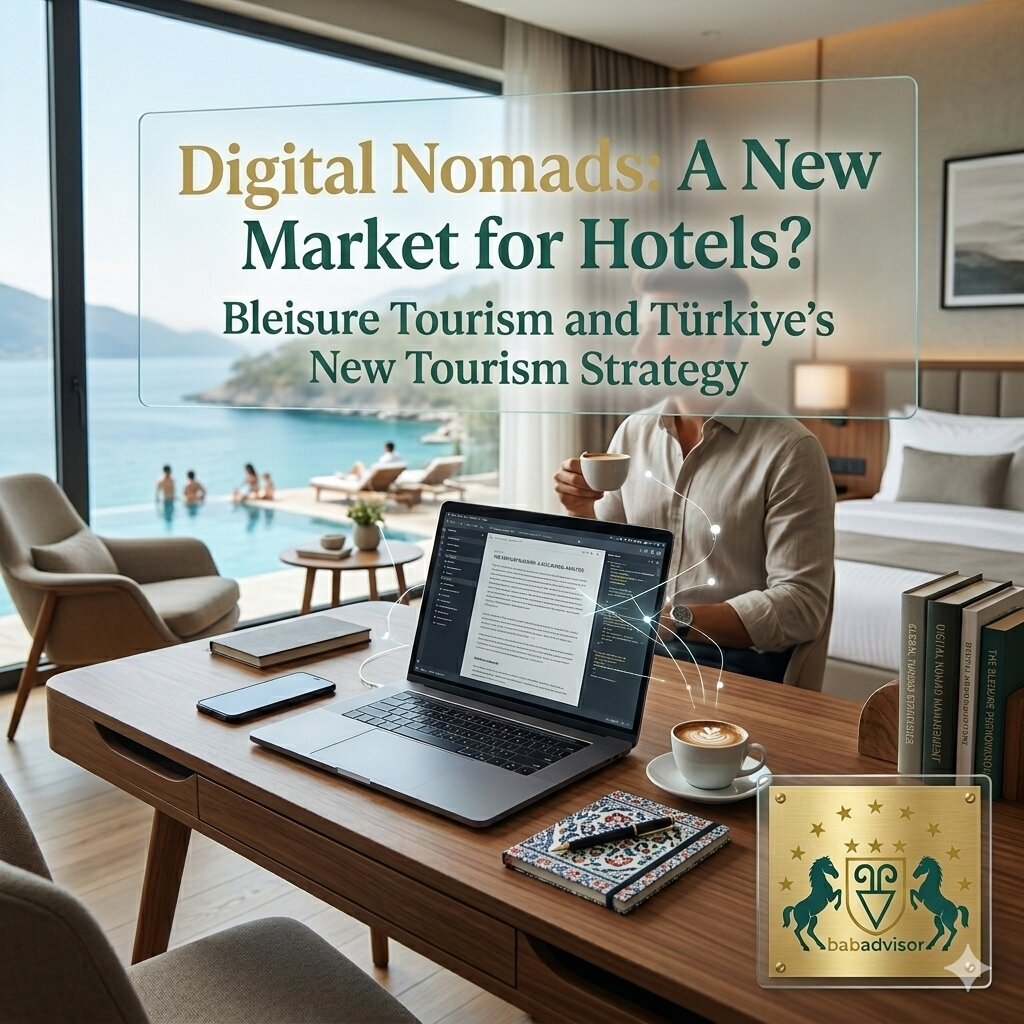
Bleisure Tourism and Turkey’s New Tourism Strategy
The tourism sector is no longer just about vacation habits—it’s transforming alongside new ways of working. With the rise of remote work, digital nomads and bleisure tourism have emerged as one of the most notable trends in recent years.
This new travel model represents a different type of traveler: professionals who work while traveling and stay for extended periods in various destinations.
Turkey has been quick to recognize this shift. In 2024, the country introduced the Digital Nomad Visa, marking a significant step in Turkey’s tourism strategy. This program aims to position Turkey not just as a holiday destination, but as a living and working hub for international remote professionals.
This raises a critical question for the tourism industry:
Do you have empty hotel rooms, or are you overlooking a growing market segment?
Bleisure Tourism: A New Market Segment in Tourism
A common phrase in the tourism sector has been for long:
“The season is over.”
However, current tourism trends show that this approach is no longer sustainable.
As of 2026, bleisure tourism (business + leisure) is not just a trend—it is a growing market segment.
Professionals traveling for bleisure and digital nomads behave differently from traditional tourists:
With the right strategy, digital nomad tourism can become a key driver of low-season occupancy for hotels.
What is Digital Nomad Tourism?
Digital nomad tourism refers to professionals who work online while living in different countries.
Importantly, their accommodation preferences are very different from typical tourists.
For digital nomads, a hotel is not just a place to sleep—it is a space where they live and work.
Why Do Digital Nomads Choose Turkey?
In recent years, Turkey has become an attractive destination for digital nomad tourism.
The country offers a combination of:
Cities like Istanbul, Antalya, and destinations in the Aegean region are increasingly popular among digital nomads and professionals seeking workation experiences.
What Do Digital Nomads Expect from Hotels?
For digital nomads, luxury often means functionality and uninterrupted connectivity rather than lavishness.
Reliable Internet
High-speed and stable Wi-Fi is not a technical detail—it is a critical selling point. Poor internet can be a dealbreaker for digital nomads.
Work-Friendly Spaces
Functional workspaces are crucial. Ergonomic chairs, proper lighting, and sufficient power outlets directly impact the length of stay.
Shared Work Areas
Quiet co-working corners or small meeting spaces transform a hotel from just an accommodation into a work eco-system.
The Digital Nomad Market Opportunity for Hotels
Digital nomad tourism represents a major sales and marketing opportunity for hotels.
However, to tap into this market, hotels need to adjust their marketing approach.
If a hotel focuses solely on “sun, sea, and sand,” it risks missing the growing digital nomad segment.
After all, digital nomads are not buying just a room—they are buying a living experience.
Strategies for Bleisure and Workation Guests
Hotels targeting this emerging segment can consider the following strategies:
Long-Stay Packages
Packages for stays of 14 days or longer are highly attractive for digital nomads.
Small perks, such as unlimited coffee, laundry service, and access to workspaces, encourage longer bookings and stabilize revenue streams.
Community Experiences
Digital nomads enjoy social connections even while traveling alone.
Networking events or small community activities can transform the hotel into more than a lodging space—it becomes a community hub.
The New Reality in Tourism: Hotels as Living Spaces
The tourism sector is undergoing a major transformation.
Hotels are no longer just places for vacations—they are evolving into spaces where people live and work while staying connected.
Hotels that recognize this early can gain key advantages:
Conclusion: Is Digital Nomad Tourism a Real Opportunity for Hotels?
Digital nomads may not yet be the largest segment in tourism, but they are a rapidly growing market.
Turkey’s digital nomad visa and new tourism strategies show that the country’s approach is moving beyond traditional holiday tourism toward living and work-oriented tourism.
For hotel owners, the critical question is clear:
Are you selling just a vacation, or are you offering a lifestyle experience?
The answer could determine your competitive edge in the future of tourism.